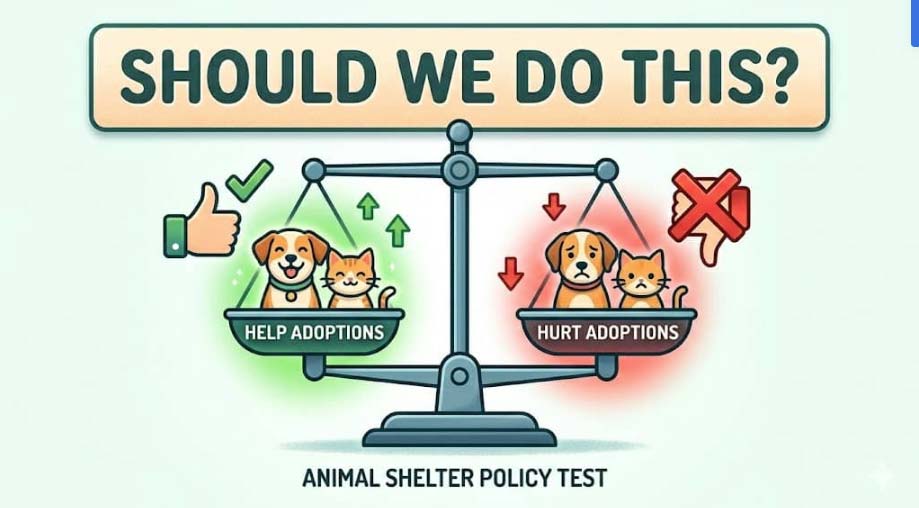

It’s the ‘slow’ season in animal shelters, which means it’s your best chance for getting longer stay dogs adopted. Here are 10 things you can do right now that cost nothing and make an immediate difference. If you read this list and find yourself thinking, “There is no way we can do that,” or “We tried that and it didn’t work,” STOP and reconsider. Each one of these actions will result in more dogs getting out more quickly, reducing your overall length of stay and improving safety and quality of life for the animals and people at your shelter.
1. Put collars on the dogs.
A dog in a collar looks like someone’s pet. Use well-fitted flat or martingale collars with tags. It’s safer if a dog gets loose, faster for staff and volunteers, and signals to adopters that this dog is ready to go home. It’s a good idea to test this out on a portion of your dogs first to work through any challenges with fitting collars correctly.

2. Use kennel fronts for marketing.
Plain kennel cards with name, breed, and age do almost nothing to get your dogs adopted. Your kennel fronts are marketing signs. Use a good photo and three or four bullet points that help each dog stand out to potential adopters. Put technical medical and behavioral information on the non-public side of the kennel if you have that option.

3. Replace locks with carabiners.
Locks that require staff assistance are barriers between your dogs and the public. They slow down volunteers, discourage interaction, and create safety risks in emergencies. Carabiners, combined with public-facing signage, are a safe alternative to kennel locks. They got the job done without creating an unnecessary roadblock.

4. Let dogs hang out with other dogs.
Dogs who get along can share a kennel, provided the kennel is big enough for two dogs. When co-housing is done correctly, it can reduce stress, increase your capacity, and show off your dogs-social dogs. It’s one of the simplest ways to improve both welfare and flow. Not quite ready to co-house? Every empty play yard is a missed opportunity. When the weather is suitable, dogs can hang out in secure yards with shade and water for extended periods. Use signage so visitors know there are dogs inside. This is also a great way to let dogs spend time with other dogs so consider co-housing in play yards for fun and stress reduction!

5. Develop an ‘urgent’ status.
I don’t mean urgent as in they’re imminently at risk of euthanasia. I’m talking about dogs who have been in your shelter more than 30 days, when you start to see the stress take its toll and behavioral decline set in. At this time, once they become urgent, they should get extra enrichment, more out-of-kennel time, be prioritized for foster outings, and be regularly marketed via social media and other outlets. If you have a lot of dogs that fall into this category, start with 10 and try it. With just a little extra support, most of them will move through your system quickly. Check out BARCS VIP urgent list for a great example.
6. Democratize your social media.
Let more people post content on your social media platforms. You need your animals in front of as many people as possible and staff and volunteers can help make it happen! One trap many shelters run into is letting people share content to one social media manager via email or a drive. Then the designated social media manager doesn’t share the content or shares it long after the fact. Avoid this problem by letting people post directly or having a streamlined process for sharing volunteer- and staff-generated content. Bastrop County Animal Services lets volunteers post on their social media platforms with incredible results!
7. Let the public walk dogs and take them on outings.
Ditch the waiting periods and mandatory volunteer orientations and let the public come in and take a dog out. A dog who seems shut down in the kennel may be completely different after an hour at a park. Day outings give dogs a break, give you better behavioral information, and often convert into adoptions or long-term fosters.

8. Ask for help beyond your existing foster network.
When you have dogs in trouble, ask the community for help publicly. And drop the “rescue only” designation for animals who could be adopted or fostered. That label often becomes a dead end. If a dog can be successful in a home, market them to homes. The shelters with the highest number of fosters recruit new fosters constantly and mention foster care in at least 30% of their social media posts.
9. Give every dog something to chew.
Benebones and Nylabones are safe for most dogs and usually don’t clog drains. Passing out and collecting chew toys is a great job for new volunteers and these can be used over and over again. Try this for just one day and you’ll be amazed at how much quieter your kennels become!

10. Ask the public for help, every single day.
Every day, invite the public to help and make it easy for them to do so. Ask for donations, social media sharing, visiting, special skills, adopters, fosters, volunteers, and more. Ask people with specialized skills like animal behaviorists, educators, and medical professionals for help with specific, skilled volunteer jobs. Ask for help with particular groups of animals. There are countless ways people can help!
Kristen