
“We require potential adopters to bring two forms of ID.”
“We’re thinking about requiring appointments to see adoptable pets instead of walk-in kennel visits.”
“We want to offer a foster-to-adopt option for people who aren’t ready to commit.”
“We have a upper respiratory infection outbreak and we’re considering closing for two weeks to treat all the dogs.”

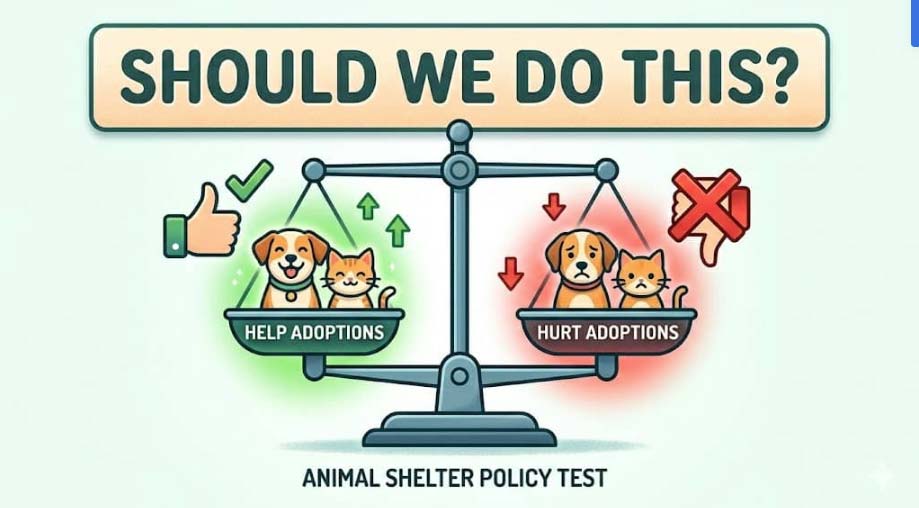
Every one of these is a real policy decision made at real shelters. Some increase adoptions and reduce length of stay. Others create barriers that reduce live outcomes, and the people implementing them don’t always see it coming. Should We Do This? is an evidence-based policy checker for animal shelters and rescues.
Animal welfare professionals make these calls constantly, often under time pressure and without easy access to the research that could inform them. That’s the gap this tool is designed to close.
How it works
You describe a policy you’re considering or already using. A sentence or two is enough to get started. The app asks clarifying questions until it understands your specific context, then delivers feedback and a clear recommendation grounded in peer-reviewed research, industry publications, and established best practices. The full response runs about a page. You can export it as a PDF to share with leadership, board members, or colleagues who need to weigh in on the decision.
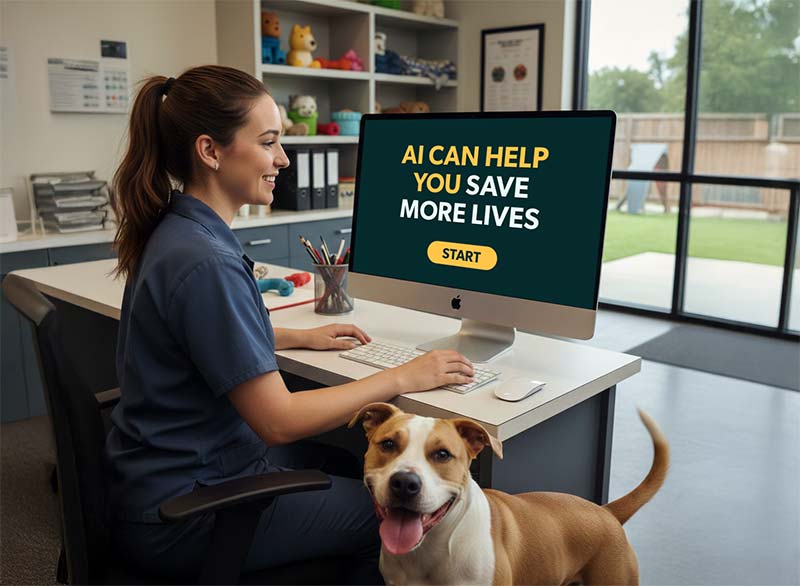
The app uses AI to draw on peer-reviewed research, industry publications, and established best practices to help you make better decisions faster, and avoid knee-jerk, reactive decision-making that often happens when shelters and rescues are in crisis.

I vibe-coded this tool using Claude to help animal welfare organizations save time and improve outcomes. Over the past couple of decades, I’ve seen firsthand how history repeats itself in our industry. With each new generation of animal welfare professionals, animal welfare organizations often fall into the same traps and make the same kinds of bad policy decisions that have to be undone later, often after years of negative consequences. It’s a cycle that sucks up valuable time and energy and often harms the organizations’ relationships with their communities.
The good news for animal welfare is there is a lot of great research out there for AI to use when offering guidance. In just the past several weeks, we’ve seen important papers published including a paper on the impacts of foster and co-housing on shelter dogs; a study on post-adoption surveys and what they tell us about adopter challenges; and a paper that explains meaningful method of analyzing length of stay in shelters. The tool helps distill and summarize information from publications like these to give you an immediately useful document.
The future of AI and animal welfare
This tool is just one of many current and future examples of how AI can benefit animal welfare. AI will certainly cause disruptions in the way we work, but it also offers us the opportunity to fix many of our most persistent problems. Try it out and let me know your feedback!
Interested in learning more about AI? Here’s how to get started using AI at work , learn about upcoming AI for Animal Welfare learning opportunities or join our AI for Animal Welfare LinkedIn group.
Kristen